
The selection of backup power equipment should follow the needs of the process and the capabilities of the installation. First establish what must operate, for how long and what can be stopped safely. Only then compare UPS power ratings, batteries or generator specifications.
Build a load list by operational importance
The equipment list should describe the function and consequences of an interruption, not just the nameplate power rating. A facility may have loads supporting IT, reception, telephony, monitoring, refrigeration and building safety systems. Requirements for equipment involved in medical processes are established with the responsible staff, designer and equipment supplier. Identical conditions should not be assumed across an entire ward.
Distinguish loads that require continuous operation, those that can tolerate a defined interruption and those that can be stopped in a controlled way. Record the restart sequence too. Some devices can operate independently; others require an available server, network, ventilation or additional power supply. These dependencies affect the actual backup scope more than a simple combined equipment list.
Distinguish the roles of UPS, generator and automatic transfer
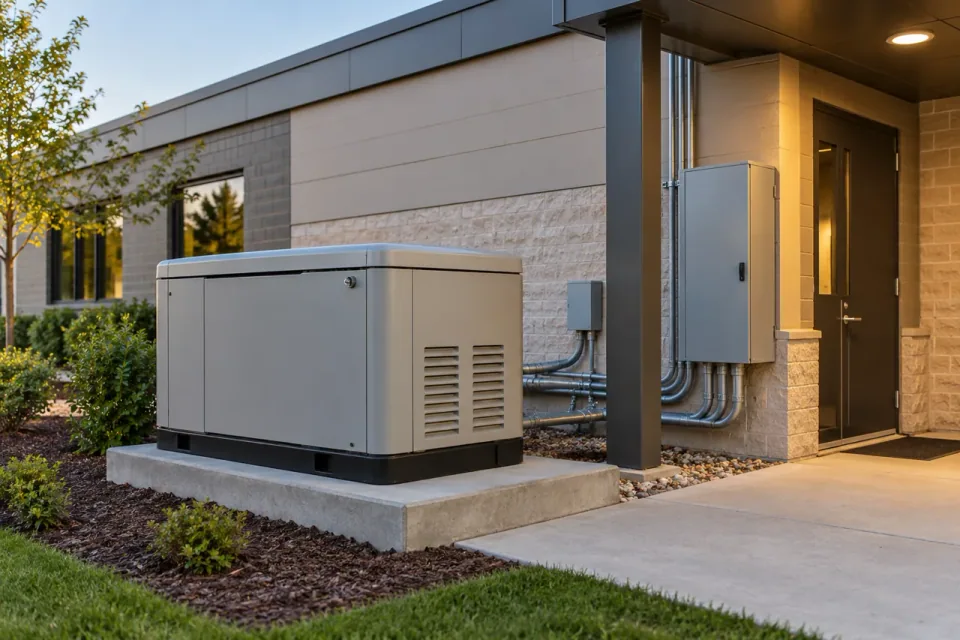
A UPS can provide backup from energy stored in batteries and appropriate supply conditions within the capabilities of its particular model. A generator is a separate energy source requiring starting, suitable installation and operation. An automatic transfer system implements the agreed switching logic between sources. The mere presence of these devices in a building does not demonstrate correct operation of the complete arrangement.
If the process cannot tolerate an interruption while the standby source starts, suitable ride-through provision must be included in the design. Selection depends on the characteristics of the loads and supply parameters. A generator should not be treated as a straightforward substitute for every UPS, or vice versa. The interaction of equipment, protective devices and installation operating conditions must be checked in each state.
Check the load and starting behaviour
Selecting equipment solely by its stated power rating may overlook starting currents, load characteristics and how devices are switched on together. This applies to refrigeration, motor-driven equipment and some power supplies, among other loads. Planned expansion, loading on individual phases and environmental conditions also matter. Input data should be confirmed through documentation, inspection and appropriate measurements.
Establish which loads restart automatically when voltage returns and which require user intervention. Restoring power at sockets does not yet mean that the process has recovered. A fridge, server and telephone system may need different checks. The plan should cover the operation of services after power returns, rather than stopping at confirmation that voltage is present.
Match autonomy to its purpose, not a universal number of minutes
Backup runtime may allow a transfer to another source, a safe system shutdown or continuation of a defined process until further action is taken. The facility should establish this purpose for each group of loads. Only then can battery capacity be selected and actual autonomy assessed against the expected load. A single figure adopted for the whole building rarely describes every requirement.
Runtime depends on the load, battery condition, temperature and the specifications of the particular unit. A result obtained at partial load should not automatically be treated as a result for the full equipment set. The documentation should state the design assumptions, how they will be verified and the conditions for reassessment. Revisit these decisions after adding loads or replacing batteries.
Allow for servicing, bypass arrangements and equipment access
The power system also needs maintenance during the facility’s normal operation. Check how inspections, battery replacement or UPS repairs can be carried out and their effect on the loads. Where a bypass is provided, its function, conditions of use and operating procedure must be unambiguous. The availability of a bypass does not mean every activity is safe without preparation and appropriate authorisation.
Assess the installation location, ventilation, temperature, service access and safe handling of components. A generator brings additional installation, operating and maintenance conditions specific to it. Planning only the purchase without considering subsequent servicing can make tests and repairs difficult. These constraints should be identified before the final solution and work programme are agreed.
Monitor readiness, not just mains failure alarms
Within the agreed scope, it is useful to observe available equipment states: load, battery operation, bypass, fault, standby source readiness and lost communication. An alarm should identify the particular system and location. Distinguish a current power interruption from a situation where standby provision is unavailable despite normal mains operation. These are different events and may require different actions.
Alarm communications also need checking. If a switch or router shuts down with a power failure, the remote dashboard may stop receiving information exactly when it is needed. Monitoring should detect stale data, and staff should know how to assess the situation locally. Technical monitoring does not replace the required functions of a local safety system or equipment operators’ responsibilities.
Plan tests with the facility’s staff
A power failure and restoration test can affect many systems at once. It needs a plan covering the scope, authorising personnel, process protection and criteria for stopping the test. Agree user notifications, the readiness of suppliers responsible for dependent equipment and post-test checks. In an operational facility, the date cannot be chosen solely around the technical team’s availability.
The test record should document conditions, load, the transfer sequence, observed messages and identified limitations. The operation of loads and services after returning to the normal arrangement is confirmed separately. If a full test was not possible, state what was actually checked. DATPOL Healthcare can prepare an agreed scope of integration, measurements, monitoring and maintenance, and help turn the results into a plan for further action.
A PRACTICAL FIRST STEP
What should you prepare for a discussion?
- A list of loads, the consequences of an interruption and the responsible person.
- Current diagrams, loads and dependencies between systems.
- The purpose of backup power and the approved requirements for each process.
- Selection and coordination of the UPS, generator, automatic transfer system and protective devices.
- Arrangements for servicing, bypass operation, monitoring and local operation.
- A safe test plan and acceptance checks for the complete process.
Questions before working together
Can a generator remove the need for a UPS?
That cannot be assumed without assessment. The devices perform different functions; the loads’ tolerance of interruptions and operation of the complete transfer arrangement are important.
How long should backup power last?
Runtime follows from the purpose of the process, the requirements of the load and the facility’s subsequent course of action. There is no single figure suitable for every installation and device.
Does a server UPS also protect temperature monitoring?
Only if the entire required chain has suitable power provision. Sensors, gateways, network equipment and communication dependencies all need checking.
Can a test be carried out without agreement from the ward?
Activities affecting availability require advance planning and authorisation. Staff and the people responsible for dependent equipment must know the scope and conditions of the test.