
DATPOL Healthcare brings together available infrastructure signals to make it easier to recognise events and their effect on facility operations. The monitoring scope depends on the equipment, available interfaces and agreed working model.
What can be monitored?
UPS power, mains availability, operating mode and available battery states. Temperatures in fridges and storage areas. Availability of networks, devices and links. Available fault signals from selected technical systems.
Not every system provides a complete set of data. Before implementation, we establish sources, reading frequency, units and the meaning of individual signals. We distinguish a measurement from a conclusion about the condition of the whole installation.
Freshness is part of the information
A reading is meaningful together with its time and source. Missing fresh data are neither a normal state nor a zero value. Historical records allow events to be compared and help establish whether a temperature change coincided with a loss of power or connectivity.
We agree which conditions constitute a warning and which require urgent checking. Identifying the cause may require local verification and a reading from the device.
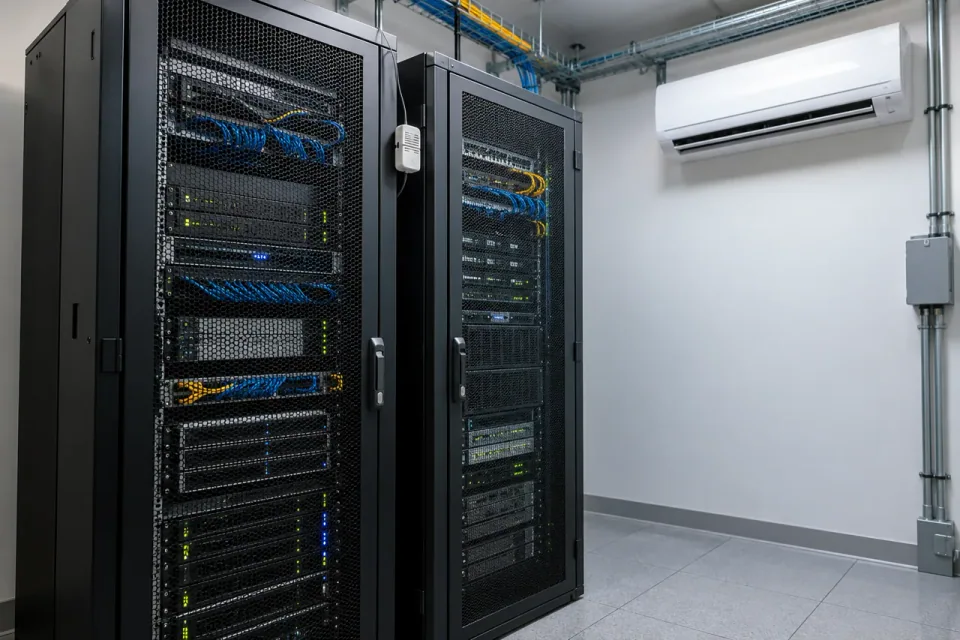
From a signal to an accountable response
An alarm needs a recipient, cover arrangements and a procedure. We agree notification channels, service hours and acknowledgement methods. A technical event does not automatically trigger a service visit; the response arrangements are set out in the contract.
Infrastructure monitoring does not replace local nurse call, the fire alarm control panel, required signal transmission or staff procedures. Each of these systems retains its own function.
Connecting monitoring with facility maintenance
Event and fault history can support inspection and modernisation plans. To be useful, it needs current documentation, appropriate permissions and a clear list of systems covered by support.
We develop the model in stages: data sources and responsibilities first, then configuration, notification testing and handover of operating instructions. Before expansion, we assess the quality of the readings already collected.
A PRACTICAL FIRST STEP
What should you prepare for a discussion?
- A list of equipment and systems to be monitored.
- Available interfaces, documentation and manufacturer restrictions.
- The existing network and power supply arrangements.
- Responsible people and cover arrangements.
- Situations requiring a local response.
- Service hours and the expected escalation arrangements.
Questions before working together
Does monitoring mean round-the-clock on-call cover?
No. Data collection and staffed service hours are separate matters. On-call cover, escalation and response times are defined in the contract.
Can different systems be integrated?
Yes, within the available interfaces and agreed permissions. The capabilities of each integration must be checked on the actual equipment.