
Storage conditions depend on many elements: refrigeration equipment, power, product placement, connectivity and the response to alarms. DATPOL Healthcare organises this technical infrastructure around the needs of the pharmacy or store.
From product requirements to a measurement plan
The starting point is not a particular sensor, but identifying what will be stored and the conditions specified in the product documentation. The pharmacy defines the required ranges, documentation arrangements and responsible people. DATPOL selects the technical measurement solution: devices, power, connectivity and presentation of the history.
A facility may contain fridges, back-of-house areas, stores and other spaces requiring observation. Each should be described separately. Having all sensors available in one dashboard does not mean they should use identical alarm thresholds. Assigning each sensor to a specific location makes subsequent investigation of deviations easier.
Fridge monitoring: measurements, history and missing data
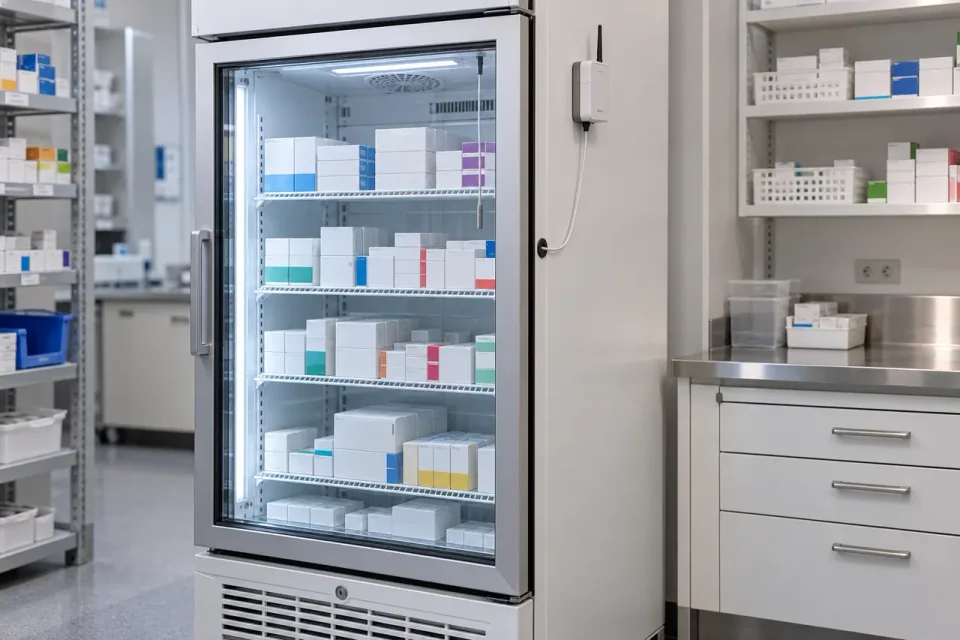
Temperature logging allows the course of an event to be reviewed, rather than showing only the value visible at that moment. We prepare clear measurement names, history and agreed reporting. Recording and retention settings are agreed according to the facility's needs and the capabilities of the selected solution.
An indication that a sensor has stopped sending current data is equally important. The last valid reading must not be mistaken for the fridge's present condition. The monitoring plan therefore considers delayed readings, sensor power and connectivity. Available door-open or power-failure information can help explain a deviation.
An out-of-hours pharmacy alarm needs a designated recipient
A high-temperature notification does not solve the problem by itself. We agree who receives alarms during working hours, who provides cover and what happens outside those hours. We also define the response when the first recipient does not acknowledge the event. Notification channels and escalation stages depend on the selected solution and agreed scope.
Thresholds, delays and arrangements for closing an event should be clear to the people working at the facility. Arbitrary settings can create excessive notifications or conceal prolonged deviations. Acceptance testing therefore covers the full alarm path as well as the sensor reading, and confirms that recipients know what action to take.
Fridge power and backup for the monitoring system
A UPS for a fridge must account for compressor characteristics, starting current and required backup duration. A UPS selected for a computer should not simply be applied to refrigeration equipment without checking the load. Assessment begins with the electrical installation, equipment specifications and suitability of the proposed solution.
Keeping the router, measurement gateway and equipment responsible for sending alarms operational is a separate task. If a power failure also stops connectivity, the system may not deliver the notification as expected. We therefore consider refrigeration and communications power together and agree the testing scope before accepting the installation.
Networks, permissions and access to documentation
A pharmacy relies on dispensing and sales systems, workstations, an internet connection and often CCTV. Adding measurements should be part of an organised network. Separating technical devices from guest access and controlling service connections makes maintenance easier and reduces unintended changes.
Access to the measurement dashboard, reports and configuration should be assigned to the appropriate people. Separate viewing and configuration roles help maintain predictable working arrangements. We also establish where instructions, equipment lists and notification settings are kept, so that a staff member leaving or a phone being replaced does not prevent alarms from being handled.
Calibration and documentation within an agreed scope
Documentation should reflect the actual purpose of the measurement. Requirements for calibration, measuring-point placement, temperature mapping and report retention are agreed with the responsible person at the pharmacy before implementation. Installing a sensor alone should not be confused with preparing a complete quality documentation system.
DATPOL can organise device identification, available certificates, records of completed work and the agreed inspection schedule. If a deviation occurs, the technical history supports the investigation. Decisions about medicines or other products require assessment by authorised staff; they are not an automatic conclusion from a dashboard reading.
Expand from one fridge to multiple sites
Support can begin with a selected fridge and gradually extend to other rooms or facilities. Consistent naming, ownership and reporting arrangements should be established from the outset. This allows monitoring to grow without losing information about the measurement location or who owns the alarm response.
The maintenance plan includes checks of sensors, power, connectivity and notification recipients. Settings should be reviewed after changes to equipment or the facility's organisation. Moving a fridge to another room can alter communications conditions, circuit availability and access arrangements. Such changes should be recorded in the documentation.
IT support, backups and user assistance
Workstations, accounts and service access need attention between upgrades as well. We combine facility IT support with backups, updates and coordination with specialist software suppliers.
Room comfort and separate medicine-storage oversight
Heating control can cover the customer area and staff rooms. Room sensors work with radiator or zone regulation under the facility’s requirements. Product storage conditions and fridge monitoring remain a separate scope that comfort control does not replace.
A PRACTICAL FIRST STEP
What should you prepare for a discussion?
- List of fridges and monitored rooms
- Storage requirements defined by the facility
- Information about power supplies and refrigeration equipment
- Available internet connection and local network
- Alarm recipients, cover arrangements and operating hours
- Required reports, documentation and inspection schedule
Questions before working together
Can a single fridge be monitored?
Yes. The scope can start with a single measuring point and expand later. Power, connectivity, history and alarm recipients are agreed from the first implementation.
Is a UPS always sufficient to protect a fridge?
Selection requires checking the equipment specifications, starting current and required backup duration. The solution is assessed together with the electrical installation and the way notifications operate.
Who sets the acceptable temperature?
An authorised person at the facility specifies the requirements using the stored products' documentation. DATPOL configures the technical parameters within the agreed scope.
Does an alarm automatically mean medicines are no longer suitable for use?
A notification alone cannot determine this. Measurement data helps describe the event, while the appropriate staff assess the product and decide what happens next.