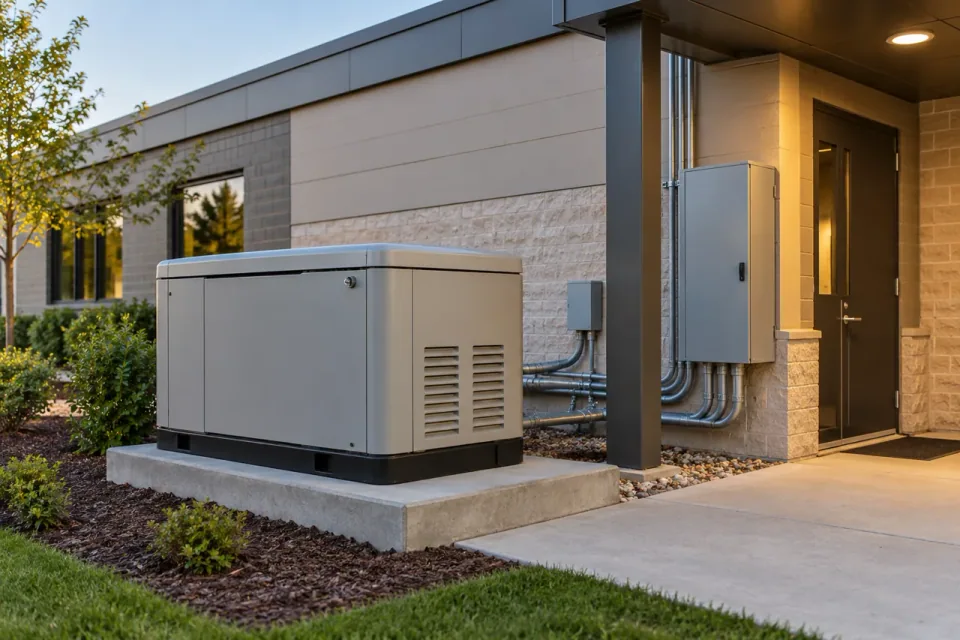
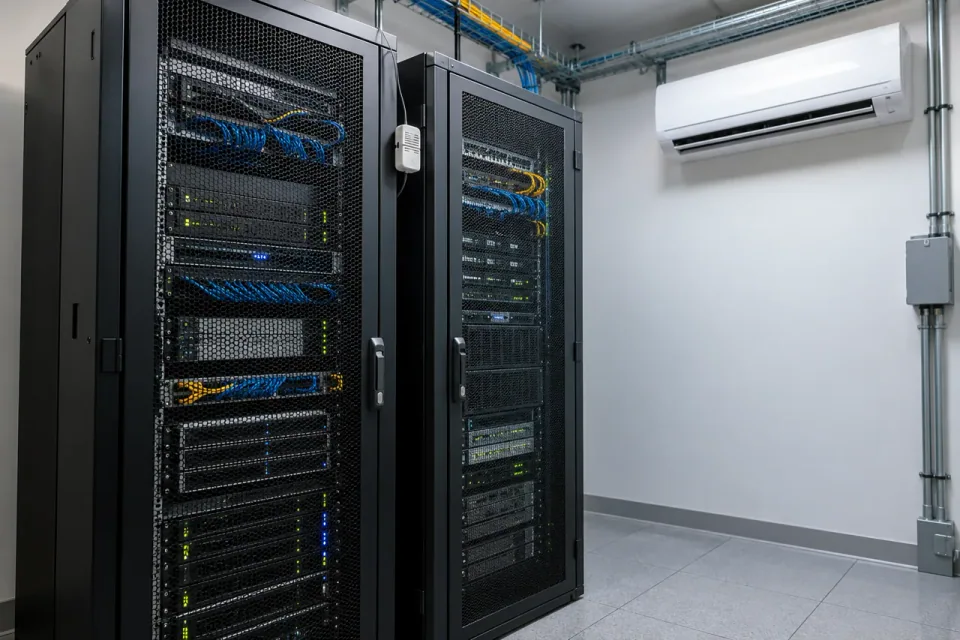
Vehicle charging is part of a facility’s technical infrastructure. DATPOL Healthcare brings together DATPOL Energy’s existing capabilities with electrical installations, backup power, testing and maintenance. We develop the scope for electric ambulances and other fleet vehicles, considering operational arrangements, available energy sources and vehicle manufacturers’ requirements.
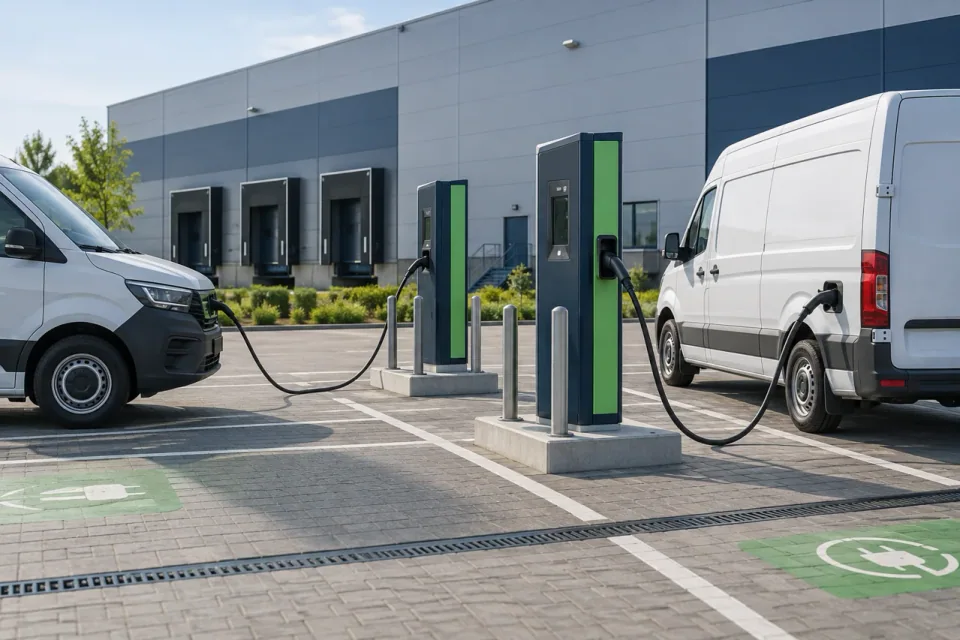
Charging bays designed around ambulance and fleet operations
We start with how vehicles are used: dwell times, turnaround, operating bases and the availability required. With the fleet operator, we agree which bays serve ambulances and which support facility transport, staff or visitors. Access to an operational bay should reflect its purpose and the agreed rules for its use.
AC or DC selection depends on vehicle capability, manufacturer requirements and the actual charging window. We review parking layouts, access, manoeuvring, cable arrangements and equipment protection. At a hospital, ambulance movements, deliveries and access to entrances must be considered rather than treating the charger as an arbitrary item of car park equipment.
Traction battery charging and ambulance shore power are separate scopes
Charging an electric ambulance’s traction battery and providing shore power to its conversion and onboard equipment are distinct requirements. Each calls for a review of the vehicle documentation, connection interface and permitted operating conditions. Auxiliary battery charging functions must also be confirmed for the particular solution.
Before selecting equipment, we establish which activities need to take place while parked and who is responsible for operating them. Compatibility is confirmed with the vehicle or conversion supplier. We do not assume that one connection serves every purpose or that any vehicle can export energy into the facility’s installation.
Resilient power covers the complete chain that needs to operate
The mains-outage plan defines which bays must remain available, at what power and in what order they can return to operation. We assess the load balance, installation constraints and charger compatibility with a backup source. Generator, automatic transfer system or battery energy storage selection requires an appropriate design and confirmation of equipment compatibility.
A UPS may support controls, communications and selected auxiliary circuits. Supplying the charger’s power circuit is a separate task requiring an appropriately sized source and verification under load. The scope also covers transfer, stabilisation and restart. The presence of solar PV alone does not establish that the system can operate during a grid outage.
Charging capacity that respects the facility’s priorities
Charging infrastructure should work within the existing energy balance. We agree the available power allocation, load measurement and rules for limiting or suspending selected sessions. The power priorities of essential facility functions remain the starting point when operating from a backup source as well.
Where supported, we integrate load management, schedules and EMS monitoring. Vehicle priorities are set by the fleet operator. The assessment can consider battery storage and solar generation, with a separate evaluation of the backup function. An agreed response to loss of communication with the management system is also required.
Monitoring availability, sessions and the actual technical state
We monitor the available charger states, faults, power, charging sessions and supply status. Data access depends on the equipment, its interfaces and the agreed integration. We show when information was last received and distinguish current conditions from historical records. Lost communication needs its own indication rather than leaving an old status presented as current.
A connected cable or an available charger does not confirm that an ambulance is ready for a task. Vehicle and battery information can only be included where access has been confirmed. Readiness assessments and decisions about deploying the fleet remain with the operator, in accordance with its procedures.
Handover, mains-failure tests and ongoing maintenance
Acceptance criteria are agreed before commissioning. They cover the specified vehicles, charging sessions, load limits, alerts and responses to power or connectivity loss. We check the return-to-service sequence, any power reduction and the conditions for restarting a session. Tests are planned with the facility and operator, taking ongoing operations into account.
We hand over documentation, bay identification, the results of agreed checks and fault-reporting arrangements. Maintenance can cover chargers, communications, testing and the available backup power components. Inspection and update scope, support hours and responsibilities are agreed as part of the service arrangements.
A PRACTICAL FIRST STEP
What should you prepare for a discussion?
- Vehicle models, manufacturer documentation and ambulance conversion requirements.
- The number of bays, fleet turnaround and available parking windows.
- The power balance, installation drawings and available backup sources.
- The facility’s power priorities and the required operating scope during an outage.
- Parking, access, bay authorisation and connectivity arrangements.
- Those responsible for the fleet, infrastructure, alerts and acceptance.
Questions before working together
Can any charger be supplied by a standard UPS?
Selection requires assessment of the particular charger and installation. Supporting controls or communications is different from supplying the power circuit. The solution must be designed and checked under the agreed load.
Can ambulance charging be planned for a mains outage?
Yes, a backup operating scope can be included in the design. This requires agreement on bays, power, priorities, the energy source and transfer arrangements, followed by tests of the complete system.
Can the infrastructure also serve the facility’s other vehicles?
Yes. Operational bays, support vehicles and staff or visitor parking may have different access rules and priorities. Their operation is planned within a shared power balance.
Does traction battery charging replace shore power for ambulance equipment?
The vehicle and conversion documentation establishes the functions and connections required. We assess these scopes separately and agree them with the appropriate supplier.
Does monitoring confirm that an ambulance is ready to deploy?
Monitoring provides the available technical data. The fleet operator assesses readiness under its own procedures; charger or cable status alone does not provide that confirmation.
Related DATPOL service: DATPOL Energy — charging stations and energy infrastructure.